
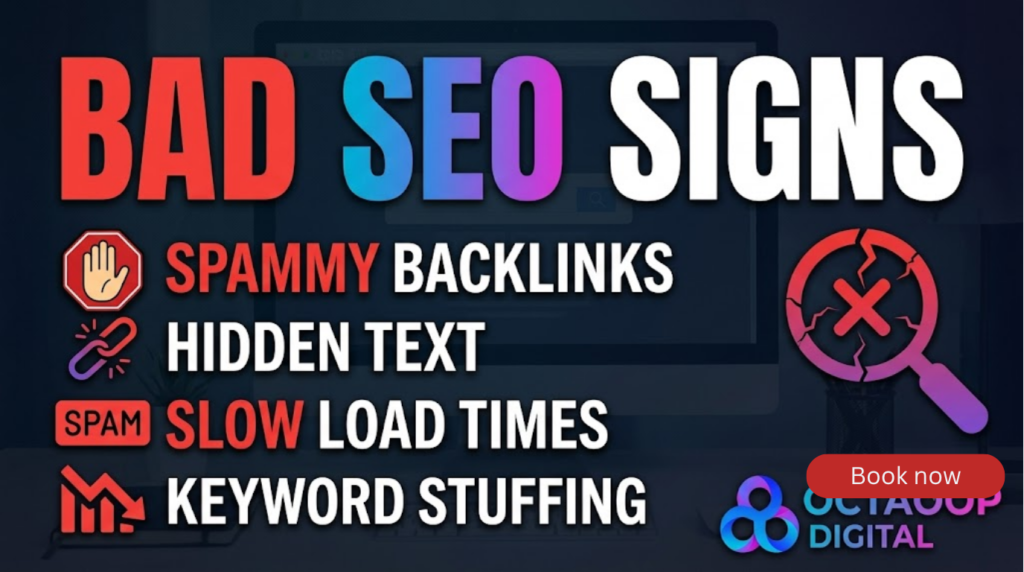
Investing in search engine optimization should feel like building a long-term commercial asset. When executed correctly, a solid search strategy increases organic search visibility, builds domain authority, and brings a steady stream of qualified sales leads directly to your business.
However, when handled incorrectly, outdated techniques or sloppy agency work can silently destroy your search rankings, trigger manual search engine penalties, and waste thousands of pounds in marketing budget.
Recognizing bad seo signs early is the difference between dominant search visibility and an expensive domain recovery process. In this comprehensive guide, we will cover seven critical red flags indicating your search strategy is failing, explain how bad practices trigger algorithm penalties, and provide a clear recovery plan to protect your website’s organic growth.
1. Why Bad SEO Harms More Than Just Your Rankings
Modern search engine algorithms prioritize user intent, technical site health, and verified domain authority. When an agency or freelancer relies on obsolete, black-hat, or automated shortcuts, search engines notice quickly.
The True Cost of Poor Search Engine Optimization:
- Algorithmic De-indexing: Search engines downrank sites that push low-quality content, exact-match anchor manipulation, or unnatural backlinks.
- Wasted Marketing Retainers: Paying monthly fees without seeing pipeline leads or commercial growth drains your budget.
- Brand Reputation Damage: AI-generated or thin articles published under your brand name dilute your credibility with real customers.
2. Seven Critical Bad SEO Signs You Cannot Ignore
If you notice any of the following seven red flags on your website or in your monthly agency reports, immediate corrective action is required:
| Warning Red Flag | What It Looks Like in Practice | Commercial Risk Level |
| 1. Focus on Vanity Metrics | Celebrating impressions or non-commercial rankings while organic leads decline. | High (Misaligned business goals) |
| 2. Toxic or Spam Backlink Profile | Buying bulk PBN (Private Blog Network) links or directory blasts. | Critical (Risk of manual penalty) |
| 3. AI-Generated Thin Content | Publishing hundreds of generic, unedited posts lacking original research. | High (Helpful Content updates penalty) |
| 4. Keyword Stuffing | Forcing target keywords unnaturally into headers and body paragraphs. | Medium (Degraded user experience) |
| 5. Lack of Technical Fixes | Ignoring page speed bottlenecks, crawl errors, and Core Web Vitals. | High (Mobile drop-offs) |
| 6. Zero Transparency & Reporting | Hiding behind “proprietary methods” without showing deliverable logs. | Critical (Wasted retainers) |
| 7. Sudden Traffic Drops | Sharp, permanent declines in organic clicks following core updates. | Critical (Active search penalty) |
3. How Outdated Search Tactics Trigger Algorithmic Penalties
Understanding how search algorithms evaluate content quality helps you evaluate whether your current partner is using safe, future-proof practices.
1. Keyword Stuffing vs. Semantic Relevance
In the early days of digital marketing, repeating a focus keyword dozens of times helped pages rank. Today, search engine algorithms use Natural Language Processing (NLP) to understand context and entities. Forcing repetitive phrasing into your text signals poor writing and triggers automated quality demotions.
2. Unnatural Link Networks vs. Earned Digital PR
Quality backlinks act as votes of confidence. However, automated directory submissions, cheap link farms, and hidden footer links violate webmaster guidelines. A sudden influx of low-quality links tells search engines that your backlink profile is manipulated.
3. Thin Content vs. Comprehensive Topic Authority
Publishing short, generic 300-word articles just to target a long-tail keyword no longer works. Modern search engines reward comprehensive content that thoroughly satisfies user search intent and demonstrates direct industry experience.
For a deeper dive into evaluating partner performance and deliverables, read our guide on why my SEO agency is failing. You can also review official guidelines on content helpfulness directly on Google Search Central.
4. The 4-Step Recovery Plan for Fixing Bad SEO
If your website has suffered traffic losses or you suspect your previous provider used unsafe practices, follow this structured turnaround roadmap:
1.Conduct a Complete Backlink & Technical Audit:Step 1.
Run an independent audit using tools like Google Search Console, Ahrefs, or Semrush to identify toxic links, 404 errors, and indexing bottlenecks.
2.Prune or Rewrite Low-Quality Content:Step 2.
Audit your existing library. Consolidate thin, overlapping, or AI-generated articles into authoritative, high-value resources.
3.Disavow Harmful & Spammy Inbound Links:Step 3.
If your domain was hit with toxic link blasts, compile a disavow file and submit it via Google Search Console to protect your domain authority.
4.Transition to Modern Generative Engine Optimization:Step 4.
Structure your content for both traditional search and conversational AI engines by integrating structured schema data and high information density.
The Gold Standard of Organic Search: Authentic SEO focuses on user experience, technical performance, and commercial revenue—not quick hacks. If a strategy sounds too good to be true, it will likely cost you more to fix later.
To learn how conversational search engines evaluate source citations and brand authority, explore our complete guide to ranking in ChatGPT Search UK. For additional industry performance benchmarks, check out the HubSpot Marketing Blog.
To ensure your web architecture is built for long-term growth and high conversions, explore our Octaoop Digital Custom Web Design Services or review our full range of Octaoop Digital SEO Services.
Rebuild Your Search Engine Authority with Octaoop Digital
Recognizing bad seo signs is the first step toward fixing your organic search presence. You do not have to accept declining traffic, opaque reporting, or risky black-hat tactics.
At Octaoop Digital, we build transparent, technical, and revenue-focused organic strategies. From deep site health audits to high-authority content creation and digital PR, we help ambitious businesses turn their websites into reliable growth engines.
Suspect your website is suffering from bad SEO? Contact the Octaoop Digital Strategy Team today for a comprehensive, independent SEO health audit.
