

Is your corporate website failing to attract the volume of high-quality organic traffic your business deserves?
Many business owners in the UK invest substantial amounts of capital into writing blog posts and publishing web designs, yet they remain stuck on the second or third page of Google.
Consequently, they lose thousands of pounds in potential customer inquiries to smarter competitors who have properly optimized their technical foundations.
Fortunately, discovering how to audit website seo allows you to expose and resolve the hidden technical, on-page, and off-page roadblocks holding your site back. It gives you a clear, step-by-step framework to maximize your organic search engine visibility and capture valuable B2B search terms.
Let’s dive into the critical steps needed to audit your site like a professional SEO agency.
1. Expose Hidden Crawling and Indexing Blockages
Before focusing on your actual keyword density, you must ensure that search engines can easily read and catalog your web pages.
If search engine bots run into technical blockages when traversing your website, your content will never show up in search results.
Leverage Google Search Console
Google Search Console is a powerful, free tool that shows you exactly how the world’s leading search engine views your site structure.
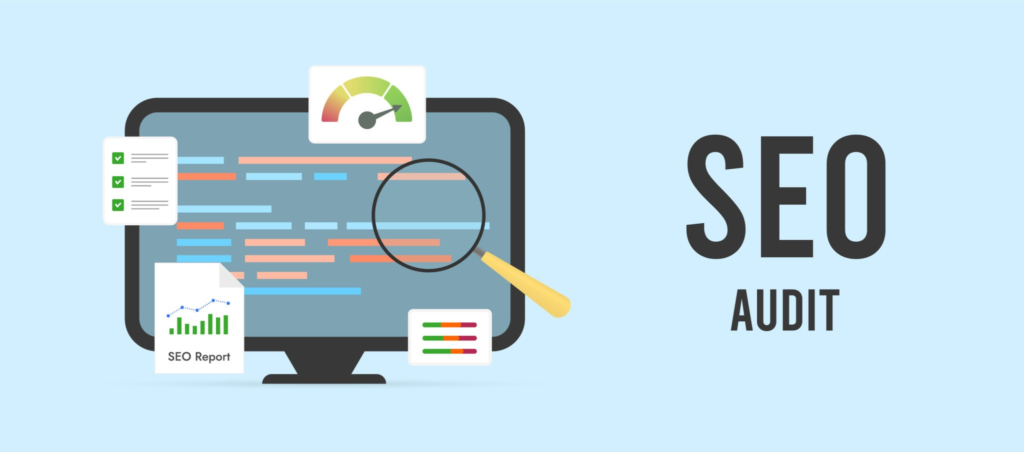
Furthermore, you can quickly spot broken redirect loops, missing XML sitemaps, and restricted “noindex” tags that prevent your primary service pages from ranking.
Correcting Missing Sitemaps
Alternatively, if your XML sitemap is not correctly configured or updated, Google will miss your newest and most valuable blog content.
Ensuring that your main navigation paths and sitelinks are fully accessible is the absolute baseline of a successful search engine audit.
2. Check Your Loading Speed and Mobile Usability
In today’s fast-paced digital environment, online users expect instant page loads.
If your website takes longer than three seconds to display on a mobile device, your visitors will quickly bounce back to the search results page.
When you analyze your site’s performance, prioritize checking your Core Web Vitals using tools like PageSpeed Insights.
| Metric | Target Goal | Impact on Rankings |
| Largest Contentful Paint (LCP) | Under 2.5 seconds | Measures how quickly the primary content loads on-screen |
| Interaction to Next Paint (INP) | Under 200 milliseconds | Measures the interface’s responsiveness when users click links |
| Cumulative Layout Shift (CLS) | Under 0.1 | Measures structural page stability to prevent layout shifting |
[Internal Link: Resolve persistent page speed issues using our high-performance Octaoop Digital Bespoke Web Design services].
3. Analyze Your Target Keywords and Search Engine Rankings
An essential component of learning how to audit website seo is evaluating which of your pages are currently generating traffic, and which have slipped in rank.
You must continuously monitor your search positions to identify quick-win keywords that can be easily pushed onto page one.
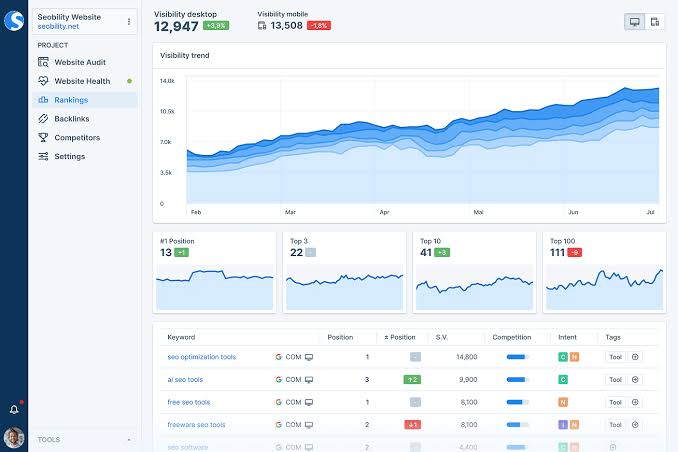
By reviewing your ranking data, you can easily identify “low-hanging fruit”—keywords sitting at positions 11 to 15 that only need a minor content refresh to break into the top tier.
[External Link: To compare your keyword tracking workflows with top industry methodologies, check out the specialized guides on HubSpot on Digital Trends].
4. The Complete 4-Step Technical SEO Audit Checklist
To streamline your process and optimize your website efficiently, execute these four audit phases in order:
1.Audit Crawler Visibility and Indexation:Step 1.
Run your domain through a site crawler to identify duplicate title tags, missing meta descriptions, and broken 404 links.
2.Evaluate Your On-Page Content Quality:Step 2.
Review your top-performing pages to ensure your target primary keywords appear naturally in the H1 tags, URL slugs, and introductory sentences.
3.Analyze Internal and External Link Paths:Step 3.
Ensure your blog posts include strategic internal links pointing back to your main service pages, passing valuable authority down your funnel.
4.Map Out a Systematic Content Refresh Strategy:Step 4.
Update thin, outdated articles with fresh statistics, detailed step-by-step guides, and clean layouts to reclaim your search positions.
The UK Ranking Tip: Never underestimate the power of clean internal links. By linking your high-ranking blog posts directly to your primary services, you pass valuable page authority straight to your conversion pages.
Supercharge Your Organic Search Traffic with a Professional Audit
You do not have to guess why your website isn’t ranking on Google or waste valuable resources on ineffective optimization strategies.
Completing a technical SEO audit is the single most reliable way to identify technical errors, improve your user experience, and claim the top positions on search engine results pages.
At Octaoop Digital, we act as your dedicated digital team, delivering exhaustive SEO audits, bespoke web design overhauls, and high-performance lead generation campaigns. We handle your technical setup from top to bottom, so you can focus entirely on running your business operations.
Ready to find out exactly what’s holding your website back in search? Contact the Octaoop Digital Strategy Team today to secure your free organic visibility and site audit review.
